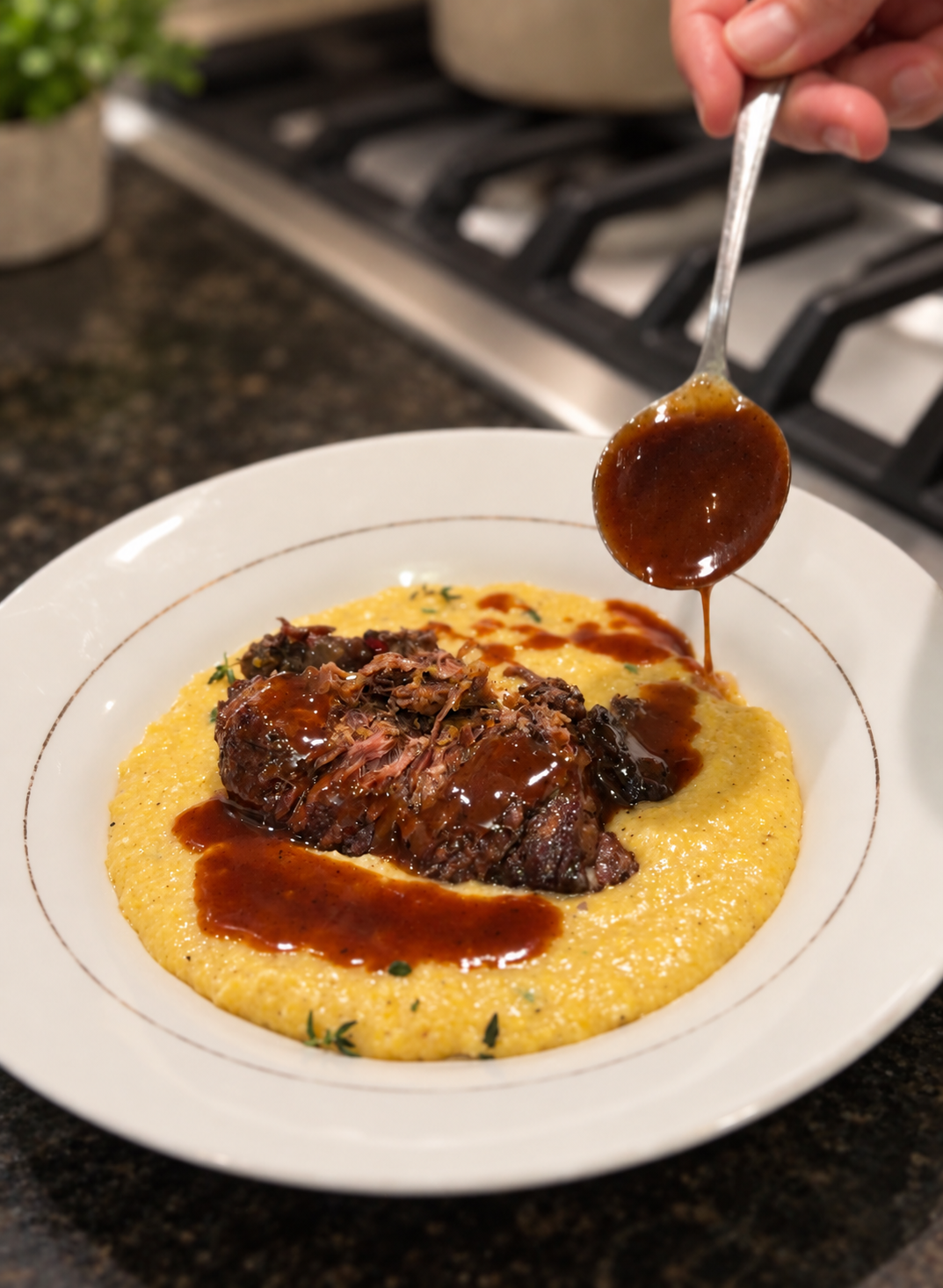
Some meals invite us to slow down a little. These Burgundy-braised short ribs are that kind of dinner: a pot tucked into the oven, a kitchen that smells wonderful, and something comforting to gather around at the end of the day.
The short ribs cook gently in red wine, beef stock, and herbs until fork-tender. Then we turn the cooking liquid into a glossy sauce and spoon everything over creamy Parmesan-herb polenta. An optional jammy egg makes each bowl feel a little extra special.
There are a few steps, but none are complicated. This is a family-size recipe that serves 4–6 people, with most of the cooking time spent in the oven.
Why This Recipe Works
- Searing builds flavor. A good brown crust gives the beef and sauce a deeper, richer taste.
- Gentle cooking makes the ribs tender. A covered pot and a 325°F oven give the connective tissue time to soften.
- The sauce comes from the braise. Straining and reducing the cooking liquid concentrates all that flavor without needing flour.
- Polenta brings everything together. Its creamy texture is perfect for catching the sauce.
- You can get a head start. Cook the short ribs a day ahead for company or a slower weekend dinner.
Ingredients
For the Burgundy-Braised Short Ribs
- 4 pounds bone-in beef short ribs, preferably thick English-cut ribs, about 6–8 pieces depending on size
- 2 teaspoons Diamond Crystal kosher salt, or 1 teaspoon fine sea salt, plus more to taste
- 1 teaspoon freshly ground black pepper
- 2 tablespoons olive oil
- 1 large yellow onion, diced
- 2 medium carrots, diced
- 2 celery stalks, diced
- 4 garlic cloves, minced
- 2 tablespoons tomato paste
- 2 cups dry red Burgundy wine, or another dry Pinot Noir
- 2 cups low-sodium beef stock, plus up to 1 cup more as needed
- 1 tablespoon Worcestershire sauce
- 2 fresh rosemary sprigs
- 4 fresh thyme sprigs
- 2 bay leaves
- 2 tablespoons cold unsalted butter, cubed, for finishing the sauce
For the Creamy Parmesan-Herb Polenta
- 3 cups low-sodium chicken stock
- 3 cups whole milk
- 1¼ cups dry polenta, regular rather than instant
- 3 tablespoons unsalted butter
- ¾ cup freshly grated Parmesan cheese
- ½ teaspoon freshly ground black pepper
- 2 tablespoons chopped fresh parsley
- 1 tablespoon chopped fresh chives
- Salt, to taste
- Additional warm stock, milk, or water, as needed to loosen
For the Optional Jammy Eggs
- 4–6 large eggs, refrigerator-cold, one per serving
- Chopped parsley or chives, for serving
- Salt and black pepper, to taste
How to Make Burgundy-Braised Short Ribs
1. Heat the oven and season the beef
Preheat the oven to 325°F. Pat the short ribs very dry with paper towels, then season all over with the salt and pepper. A dry surface helps the beef brown properly.
2. Sear the short ribs
Heat the olive oil in a large, heavy Dutch oven over medium-high heat. Working in batches, sear the ribs for 3–4 minutes per meaty side, until deeply browned. Transfer to a plate. Leave space between the pieces; crowding the pot traps moisture and makes browning harder.
3. Cook the vegetables
Carefully spoon off excess fat, leaving about 2 tablespoons in the pot. Reduce the heat to medium. Add the onion, carrots, and celery. Cook for 6–8 minutes, stirring occasionally, until softened. Add the garlic for 30 seconds, then stir in the tomato paste and cook for 1–2 minutes, until it darkens slightly.
4. Add the wine and stock
Pour in the wine, scraping the bottom of the pot to release the browned bits. Simmer for 5 minutes. Add 2 cups beef stock, Worcestershire sauce, rosemary, thyme, and bay leaves.
Return the ribs and accumulated juices to the pot. Arrange snugly, mostly in one layer. The liquid should reach halfway to two-thirds up the ribs. Add extra stock if needed; the ribs do not need to be completely submerged.
5. Braise until fork-tender

Bring to a gentle simmer. Cover tightly and transfer to the oven. Cook for 3–3½ hours, checking tenderness at about 2½ hours. Particularly thick ribs may need closer to 4 hours.
If the liquid gets low, add more stock and replace the lid. Keep cooking until a fork slides easily into the meat and turns with very little resistance.
6. Make the polenta near the end
Start the polenta about 40 minutes before you expect the ribs to be ready. It can stay warm over very low heat while you finish the sauce; stir in warm liquid if it thickens.
7. Strain and finish the sauce
Transfer the tender ribs to a platter and cover loosely. Strain the braising liquid through a fine-mesh strainer into a saucepan or heatproof bowl. Discard the cooked vegetables and herb stems. Skim off the fat, or use a fat separator.
Simmer the strained liquid, uncovered, over medium heat for 15–25 minutes, until reduced to about 1½–2 cups and lightly coating the back of a spoon. The time depends on the liquid remaining and the width of your pan.
Take the pan off the heat. Whisk in the cold butter a few pieces at a time until glossy. Taste before adding more salt. Spoon some sauce over the ribs, reserving the rest for serving.
How to Get Tender Short Ribs
Choose thick, meaty ribs. English-cut short ribs work well for a long braise. Thin flanken-cut ribs cook differently and are not a direct substitute.
Keep the lid snug. A covered pot holds in moisture and helps the beef cook gently.
Give them enough time. If the ribs feel firm or chewy, cover and continue cooking in 20–30-minute increments.
Check the meat, not just the clock. Size, thickness, and the individual cut affect cooking time.
How Do You Know When Short Ribs Are Done?
The meat should feel very tender when pierced with a fork or skewer. A fork should twist easily, and the meat will usually have pulled back from the ends of the bones. You should be able to separate a bite with gentle pressure. If you need to tug or saw at it, the ribs need more time.
How to Reduce the Braising Liquid into a Sauce
A jus is simply a sauce made from the meat’s cooking juices. Here, we strain those juices, remove excess fat, and simmer them until the flavor becomes concentrated.
Look for a sauce that lightly coats a spoon but still pours easily. It will be thinner than gravy.
- Too thin? Simmer longer before adding butter.
- Too thick or too salty? Stir in water or unsalted stock.
- Greasy on top? Skim again before finishing with butter.
- Not glossy? Remove from heat and gently whisk in cold butter.
Avoid boiling after adding butter, which can make the sauce separate.
How to Make Creamy Parmesan-Herb Polenta

- Combine chicken stock and whole milk in a large, heavy saucepan. Bring to a gentle simmer over medium heat, watching so the milk does not boil over.
- Slowly pour in the polenta while whisking constantly.
- Reduce heat to low. Cook at a gentle bubble for 30–40 minutes, or according to package directions, stirring frequently and scraping the bottom.
- Add warm stock, milk, or water a little at a time if it becomes thick before the grains are tender.
- When smooth and tender, remove from heat. Stir in butter, Parmesan, pepper, parsley, and chives.
- Taste and add salt as needed.
The finished polenta should settle softly into a bowl. If it stands in a stiff mound, stir in another splash of warm liquid.
How to Make the Optional Jammy Eggs
A jammy egg has fully set whites and a thick, soft yolk. It adds richness, but the short ribs and polenta are lovely without it, too.
- Bring a saucepan of water to a boil, using enough water to cover the eggs by about an inch.
- Gently lower refrigerator-cold eggs into the water with a spoon.
- Maintain a gentle boil and cook for 7 minutes. For a slightly firmer jammy center, cook for 7½ minutes.
- Immediately transfer to ice water for 2–3 minutes.
- Crack, peel, and halve just before serving.
Timing varies slightly with egg size and your stove.
A note for family meals: A jammy yolk is still undercooked. Use pasteurized shell eggs for this preparation. For young children, pregnant people, older adults, or anyone with a weakened immune system, cook both the white and yolk until firm. FDA egg-safety guidance
How to Serve

Spoon warm polenta into shallow bowls. Add a short rib or a portion of meat removed from the bone, then spoon sauce over the top. If using, add a halved jammy egg and finish with parsley or chives.
For younger children, remove the meat from the bone and check carefully for small bones and tough connective tissue.
Round out the meal with roasted green beans or broccoli, a crisp green salad with vinaigrette, sautéed greens, roasted carrots, or crusty bread for the sauce.
Make-Ahead Directions
The short ribs are a good choice for cooking one day ahead.
- Braise the ribs until tender.
- Strain the cooking liquid, but wait to reduce it or add the finishing butter.
- Place ribs and strained liquid in shallow containers. Refrigerate promptly, within 2 hours.
- Once chilled, lift off the solidified fat.
- Reheat ribs with the liquid in a covered baking dish at 325°F until the meat reaches 165°F. Start checking around 30 minutes; larger pieces may take longer.
- Transfer ribs to a warm platter, then reduce the liquid and finish with cold butter.
Make the polenta and eggs close to serving for the best texture.
Storage and Reheating
Refrigerator: Store ribs with sauce in a covered container and polenta separately for 3–4 days. Refrigerate within 2 hours of cooking.
Freezer: Freeze ribs and sauce for up to 3 months for best quality. Thaw overnight in the refrigerator. Polenta can be frozen separately, although its texture may change.
Reheating ribs: Place in a covered saucepan or baking dish with sauce and a splash of stock or water. Warm gently until the meat reaches 165°F.
Reheating polenta: Warm over low heat, stirring in milk or stock until creamy and heated through.
Make jammy eggs fresh for the portions you plan to serve. These storage and reheating recommendations follow USDA guidance.
Simple Substitutions
- No Burgundy? Use another dry Pinot Noir or a dry Merlot.
- Skipping wine? Replace with an equal amount of low-sodium beef stock. Add 1–2 teaspoons red wine vinegar to the finished sauce, to taste.
- Dried herbs? Use ½ teaspoon dried rosemary and 1 teaspoon dried thyme instead of the fresh sprigs.
- No chicken stock? Use vegetable stock for the polenta.
- Different fresh herbs? Parsley and chives are gentle choices. Fresh thyme also works; start with 1 teaspoon.
- No polenta? Serve over mashed potatoes, buttered noodles, or creamy grits prepared according to the package.
- Skipping the egg? Simply leave it off. No other adjustment is needed.
Frequently Asked Questions
Do I need an expensive bottle of Burgundy?
No. Choose a dry red wine you enjoy drinking. An affordable Pinot Noir works well.
Can I make this without alcohol?
Yes. Use the stock substitution above. Cooking with wine does not guarantee that all the alcohol cooks away, so use stock if you need to avoid alcohol entirely.
Why are my short ribs still tough?
They most likely need more time. Check that there is enough liquid, cover tightly, and continue braising in 20–30-minute increments until tender.
Can short ribs overcook?
Yes. Once tender, they can eventually become dry or fall apart excessively with continued cooking. Begin checking before the end of the suggested cooking time.
Can I use boneless short ribs?
Yes, but they may cook faster. Use about 3 pounds boneless short ribs, begin checking around 2 hours, and cook until fork-tender.
Why is my sauce greasy?
Short ribs release fat as they cook. Skim the strained liquid before reducing. Making them ahead helps because the fat solidifies in the refrigerator.
Can I use instant polenta?
Yes. Follow the package’s cooking time and liquid ratio, then add the butter, Parmesan, pepper, and herbs.
Is the egg necessary?
No. It is an optional topping for anyone who enjoys a soft, rich yolk with the beef and polenta.

Burgundy-Braised Short Ribs with Parmesan-Herb Polenta
Ingredients
Equipment
Method
- Prepare: Heat the oven to 325°F. Pat the short ribs dry and season with salt and pepper.
- Sear: Heat olive oil in a large Dutch oven over medium-high heat. Brown the ribs in batches, about 3–4 minutes per meaty side. Transfer to a plate.
- Cook the vegetables: Leave about 2 tablespoons fat in the pot. Reduce heat to medium. Cook onion, carrots, and celery for 6–8 minutes. Add garlic for 30 seconds, then tomato paste for 1–2 minutes.
- Build the braise: Add wine, scrape up the browned bits, and simmer for 5 minutes. Add 2 cups beef stock, Worcestershire, rosemary, thyme, and bay leaves. Return ribs and juices to the pot. Add extra stock if needed to bring the liquid halfway to two-thirds up the ribs.
- Braise: Bring to a gentle simmer, cover tightly, and bake for 3–3½ hours, checking from 2½ hours onward. Cook until a fork slides in and twists easily. Very thick ribs may take 4 hours. Add stock if the liquid gets low.
- Make the polenta: During the final 40 minutes, bring chicken stock and milk to a gentle simmer in a saucepan. Gradually whisk in polenta. Cook over low heat for 30–40 minutes, or according to the package, stirring frequently. Add warm liquid as needed. Remove from heat and stir in butter, Parmesan, pepper, parsley, and chives. Salt to taste.
- Finish the sauce: Transfer ribs to a platter and keep warm. Strain the braising liquid and skim off the fat. Simmer uncovered for 15–25 minutes, until reduced to approximately 1½–2 cups and lightly coating a spoon. Remove from heat and whisk in cold butter. Taste and adjust seasoning.
- Optional eggs: Gently lower cold eggs into boiling water. Maintain a gentle boil for 7–7½ minutes. Transfer to ice water for 2–3 minutes, then peel and halve. Whites should be fully set with a jammy yolk.
- Serve: Spoon polenta into bowls, top with ribs and sauce, and add an optional halved egg and fresh herbs.
Leave a Reply